The cycle of life and death
Other PeopleThe novel’s recurring conception of life and death turns on resemblance rather than separation. Life can be described in the language of murder and hell; death, in turn, is imagined as lifelike, varied, and difficult to distinguish from what came before. This pattern reaches its sharpest expression in Amy Hide’s final encounter with Mr Wrong, where apparent death gives way to a renewed beginning. The ending offers release, but leaves the boundary between dying, dreaming, and starting again unresolved.
Life as hardship and variety
The equation of life with murder gives existence a stark, compressed definition. In a brief exchange, life is answered for with murder, and the reply that follows calls it hell. The connection is more than a moment of bleak wordplay: it establishes a vocabulary that returns at the novel’s close, when violence, suffering, and the conditions of being alive are again brought into the same frame. The language makes life seem less like a protected state than an ordeal whose dangers are already present within it.
The reflection on life after death extends this bleakness while resisting a simple account of what follows. If an afterlife exists, it is imagined as hell, but also as something much like life. The reasoning rests on life’s variety: because living takes many forms, death would need many forms too. Each person would have a distinct hell and would undergo it alone. Rather than defining death as one uniform destination, the passage makes it an individualized continuation of experience. Its uncertainty is part of the idea: the possibility of an afterlife is raised, but not settled.
Youth, suicide, and the length of life
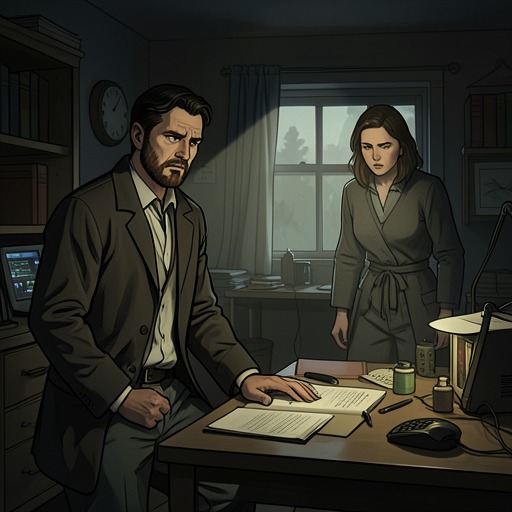
Alan’s death gives the reflection on mortality a concrete human consequence. After his suicide, a note remains on the table, concerned with his hair; the smallness of that subject sits beside the finality of his absence. The narrator’s description of him as a poor ghost connects personal loss to the novel’s wider uncertainty about what death leaves behind. The note does not provide an explanation for his death in the evidence presented here. Instead, its ordinary concern marks the distance between the life Alan had been living and the fact that it has ended.
The accompanying reflection contrasts youthful expectations with the passage of time. Young people may imagine that they will die before growing old, while treating twenty-five as the furthest visible edge of the future; age, however, arrives despite that expectation. Suicide is described as requiring nerve, and Alan’s youth is linked to his capacity to carry it out. The passage then reverses the apparent hierarchy between life and death: death lasts only a second, while old age brings recognition that life, however poor, is all that remains available. The contrast does not make life consoling; it makes its duration, rather than its quality, consequential.
Death made lifelike
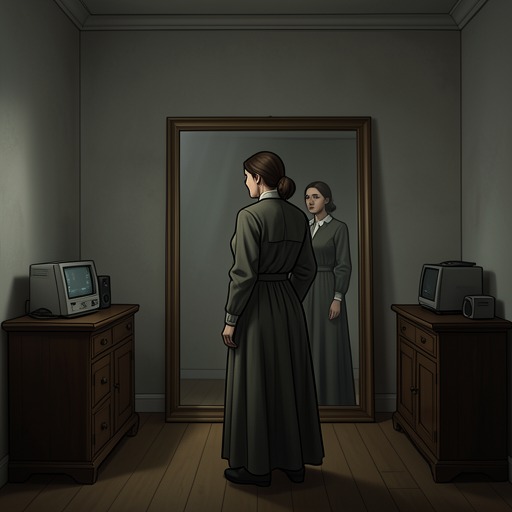
At the novel’s final encounter, Mr Wrong tells Amy that she is already dead, yet he also describes death as terribly easy to believe because it is so lifelike. The statement joins the novel’s earlier speculation about an afterlife to its closing action: death is not presented as a clearly separate world with rules the reader can verify. Instead, the familiar quality of experience makes the boundary persuasive and unstable at once. Mr Wrong’s claim that he is both policeman and murderer further binds the forces that pursue Amy into a single presence, rather than offering her a straightforward escape from danger.
Amy moves toward Mr Wrong as he approaches, apparently trying to make the next moment arrive sooner. His embrace is followed by an abrupt cessation of the experience. This transition makes the end of her encounter neither a fully explained death nor an ordinary passage through time. Its importance lies in the reversal that follows: after the sense of ending, Amy’s first response is intense gratitude, and she recognizes that time is starting again. The change from anticipated death to renewed time echoes the earlier suggestion that death may resemble life, but now gives the resemblance a narrative form.
Return and unresolved renewal
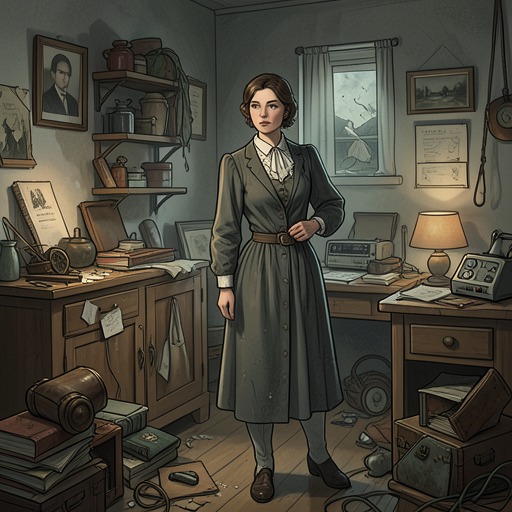
Amy’s mother addresses her as Amy and asks whether she is all right; Amy answers that she is. The exchange establishes a return to a recognizable relationship and a renewed present after the encounter with Mr Wrong. It does not explain the mechanics of that return or specify how the preceding experience should be classified. The novel therefore closes on a change that is definite in feeling—gratitude, the resumption of time, and an answer to her mother—but open in its account of what has happened.
The ending brings the cycle’s two directions together. Death appears to end experience, yet the final sequence turns toward renewed life; life is marked by suffering, yet its continuation is treated as meaningful because there is no other state whose nature can be confidently known. The novel does not resolve this tension into a single doctrine about an afterlife or a literal return from death. Instead, it makes uncertainty part of the pattern: the end can resemble a beginning, and the beginning arrives without erasing what came before.